Discover McDonald’s Allergen Info: Your Guide to Safe Dining
Dining out can be a challenge when you have food allergies or dietary restrictions. Knowing what you’re eating is crucial for your safety and well-being. Understanding the allergen information of your favorite fast-food chains is a great place to start.
McDonald’s, a popular choice for many, provides allergen information to help customers make informed decisions. In this guide, we’ll explore what you need to know about mcdonald’s allergen information to enjoy safe dining.
By the end of this article, you’ll be equipped with the knowledge to navigate McDonald’s menu with confidence, ensuring a safe and enjoyable dining experience.
Key Takeaways
- Understanding the importance of allergen information when dining out.
- Overview of McDonald’s efforts to provide allergen information.
- Tips for safely navigating McDonald’s menu.
- How to make informed decisions about your meal choices.
- The significance of being aware of your dietary restrictions.
Understanding Food Allergies and Their Importance
Food allergies are a growing concern in the United States, affecting millions of people across the country. For individuals with food allergies, dining out can be a daunting task, especially when it comes to fast-food chains like McDonald’s.
Common Food Allergies in the United States
The most common food allergies in the U.S. include peanuts, tree nuts, milk, eggs, fish, shellfish, wheat, and soy. These allergens are responsible for the majority of food allergy reactions.
According to Food Allergy Research & Education (FARE), over 32 million people in the United States have a food allergy. This number has been increasing over the years, making it crucial for restaurants to provide clear allergen information.
| Common Allergens | Prevalence | Symptoms |
|---|---|---|
| Peanuts | 1.4% of the U.S. population | Anaphylaxis, hives, swelling |
| Tree Nuts | 1.1% of the U.S. population | Anaphylaxis, hives, swelling |
| Milk | 0.4% of adults, 2.5% of children | Digestive issues, skin rashes |
The Risks of Dining Out with Food Allergies
Dining out with food allergies poses significant risks, including cross-contamination and the potential for severe allergic reactions. When eating at McDonald’s or similar establishments, it’s crucial to be aware of the menu items that contain common allergens.
Communicating your allergies to the staff is a vital step in minimizing these risks. McDonald’s staff are trained to handle food allergy concerns, but it’s also important for customers to be informed about the menu.
By understanding the risks and taking necessary precautions, individuals with food allergies can enjoy dining out while minimizing their exposure to potential allergens.
McDonald’s Commitment to Allergen Transparency
The fast-food giant has taken a proactive approach to allergen disclosure, recognizing the importance of providing customers with accurate and accessible information about their menu items. This commitment to transparency is reflected in their evolving policies and practices regarding allergen information.
Evolution of McDonald’s Allergen Information Policies
Over the years, McDonald’s has continually updated and expanded its allergen information policies to better serve customers with dietary restrictions. Initially, allergen information was primarily available in-store or upon request. However, as food allergy awareness grew, McDonald’s adapted by making this information more readily available online and through their mobile app. This shift allows customers to make informed decisions before even stepping into a restaurant.
Key developments in McDonald’s allergen policies include:
- Introduction of detailed allergen charts on their website
- Regular updates to their menu labeling
- Training for staff on handling allergen-related inquiries
How McDonald’s Addresses Cross-Contamination Concerns
McDonald’s acknowledges the risk of cross-contamination and has implemented measures to mitigate this risk. While they cannot guarantee completely allergen-free environments, they provide detailed information about common allergens present in their kitchens. This transparency helps customers assess the risks associated with dining at McDonald’s.
McDonald’s addresses cross-contamination through:
- Clear labeling of ingredients and potential allergens
- Staff training on food preparation procedures
- Regular kitchen audits to minimize cross-contamination risks
Accessing McDonald’s Menu Allergens Information
McDonald’s provides multiple ways for customers to access allergen information, ensuring a safe dining experience. With the rise of food allergies and dietary restrictions, it’s crucial for restaurants to be transparent about their menu ingredients. McDonald’s has taken significant steps to cater to this need.
Using the McDonald’s Website for Allergen Details
Customers can visit the McDonald’s website to find detailed allergen information for their menu items. The website provides a comprehensive list of ingredients and potential allergens for each item. To access this information, simply navigate to the McDonald’s website, select the menu item you’re interested in, and look for the allergen information section.
Navigating the McDonald’s App for Allergen Information
The McDonald’s app offers a convenient way to access allergen information on-the-go. By downloading the app and selecting your preferred menu item, you can view detailed allergen information. The app also allows you to filter menu items based on specific dietary needs.
In-Restaurant Resources for Allergen Information
For those dining in, McDonald’s restaurants provide allergen information posters or brochures. These resources are typically located near the ordering area or at the counter. If you can’t find the information, don’t hesitate to ask the staff for assistance.
Understanding McDonald’s Allergen Chart
McDonald’s allergen chart is a valuable tool that helps customers quickly identify potential allergens in their menu items. The chart typically includes information about common allergens such as peanuts, tree nuts, milk, eggs, fish, shellfish, wheat, and soy. By referencing this chart, customers can make informed decisions about their meal choices.
As stated by McDonald’s, “We’re committed to providing our customers with the information they need to make informed choices about their meals.” This commitment is reflected in their comprehensive allergen information resources.
Common Allergens Found in McDonald’s Menu Items
Understanding the allergens present in McDonald’s menu items is crucial for customers with food sensitivities. McDonald’s, a global fast-food leader, offers a diverse menu that, like many restaurants, contains various allergens. Being aware of these allergens is key to safe dining.
The Big 8 Allergens in McDonald’s Food
The “Big 8” allergens are responsible for the majority of food allergy reactions. McDonald’s menu includes items that contain these common allergens:
Wheat and Gluten Sources
Many McDonald’s menu items, such as buns, bread, and some desserts, contain wheat and gluten. Customers with gluten intolerance or celiac disease should be cautious.
Dairy Products in Menu Items
Dairy is another common allergen found in McDonald’s menu, particularly in milkshakes, cheeseburgers, and breakfast items like scrambled eggs and cheese.
Egg, Soy, and Other Common Allergens
Eggs are used in various breakfast items and baked goods. Soy is present in some burgers and salads. Other common allergens like peanuts and tree nuts are less common but can be found in certain desserts and specialty items.
Surprising Sources of Allergens at McDonald’s
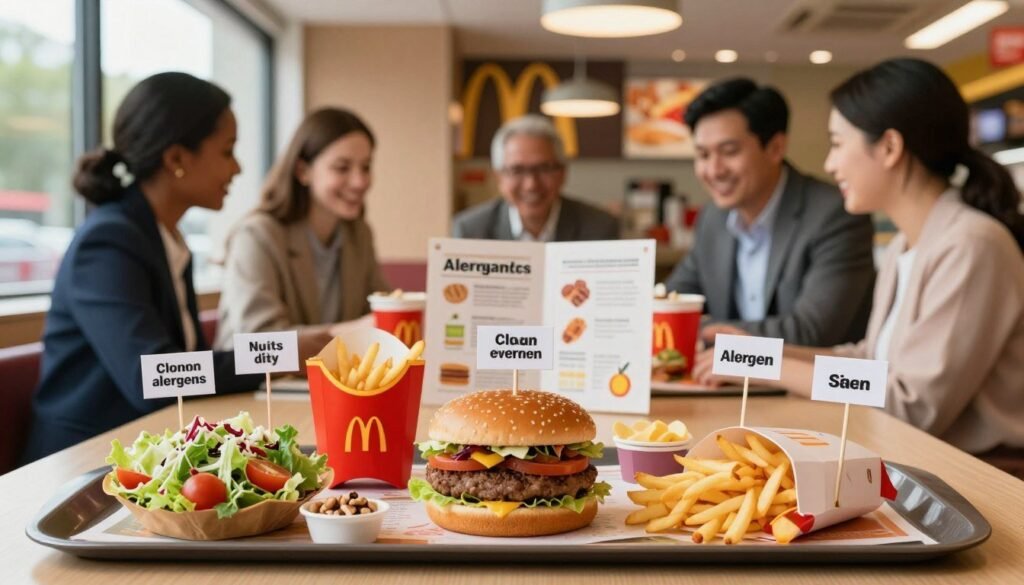
Some McDonald’s menu items contain unexpected allergens. For instance, certain sauces and dressings may contain soy or dairy. Even seemingly safe items like fries can be cooked in oil that may contain allergens.
- Sauces and dressings: May contain soy, dairy, or gluten.
- Fried foods: Potential cross-contamination with various allergens.
- Baked goods: Often contain eggs, dairy, and wheat.
Ingredient Changes and Allergen Updates
McDonald’s continually updates its menu and ingredients, which can sometimes introduce new allergens or remove existing ones. Customers are advised to check the latest allergen information on the McDonald’s website or through their mobile app to stay informed.
By being aware of the common allergens and staying updated on ingredient changes, customers with food sensitivities can enjoy McDonald’s while managing their dietary restrictions.
Navigating McDonald’s Menu with Specific Dietary Restrictions
Dining at McDonald’s with specific dietary restrictions can be challenging, but with the right information, it’s entirely possible to enjoy a meal safely. McDonald’s menu is diverse, offering a range of options that can cater to various dietary needs. Understanding the ingredients and preparation methods is key to making informed choices.
Options for Customers with Gluten Sensitivity
For customers with gluten sensitivity or celiac disease, identifying gluten-free options is crucial. McDonald’s provides some gluten-free choices, although it’s essential to be aware of the risk of cross-contamination.
Gluten-Free Menu Modifications
Some menu items can be modified to be gluten-free. For instance, opting for a grilled chicken sandwich without the bun or choosing salads with gluten-free dressings can be safe alternatives. It’s crucial to inform the staff about your gluten sensitivity so they can take appropriate precautions.
Cross-Contamination Risks for Celiac Customers
While McDonald’s takes steps to prevent cross-contamination, their kitchens are not entirely gluten-free environments. Celiac customers should be aware of this risk and discuss their concerns with the staff before ordering.
Dairy-Free Choices at McDonald’s
For those with dairy allergies or intolerances, McDonald’s offers some dairy-free options. The side salad and fruit and yogurt parfait (without yogurt) can be modified to be dairy-free. However, it’s vital to check the ingredients of the dressings and toppings.
Navigating Nut and Soy Allergies
Nut and soy allergies require careful navigation of the menu. McDonald’s uses soy products in some menu items, and nuts are present in certain desserts and toppings. Customers with these allergies should be cautious and ask about ingredients before ordering.
By being informed and communicating with McDonald’s staff, individuals with specific dietary restrictions can enjoy their meals while minimizing risks.
Allergy-Friendly Options at McDonald’s
McDonald’s offers various allergy-friendly options for customers with dietary restrictions. The restaurant chain understands the importance of catering to customers with food allergies and provides a range of menu items that are safe to consume.
Breakfast Items for Various Dietary Needs
McDonald’s breakfast menu includes items that can accommodate different dietary needs. For instance, the Fresh Fruit and Yogurt Parfait is a safe option for those looking to avoid common allergens like nuts or gluten. However, it’s essential to note that while this item is relatively safe, cross-contamination can occur.
Another option is the Scrambled Eggs, which are free from common allergens like nuts, fish, and shellfish, but contain egg, a major allergen. Customers can modify their breakfast by choosing to hold certain ingredients to suit their dietary needs.
Main Menu Items with Fewer Allergens
McDonald’s main menu includes several items that are naturally lower in common allergens or can be modified to reduce allergen exposure.
Burger Options and Modifications
The Hamburger and Cheeseburger are popular choices that can be modified to suit customers with specific allergies. For example, asking for no cheese can help those with dairy allergies. However, it’s crucial to be aware that the buns contain gluten, and the cooking surfaces may be shared with other menu items.
Chicken and Fish Alternatives
The Filet-O-Fish sandwich is a good option for those looking for a non-beef alternative, but it contains fish and is cooked in the same oil as other menu items. The Chicken McNuggets can be a viable option if you avoid certain sauces that may contain allergens like milk or nuts.
Sides and Desserts for Allergy-Conscious Diners
For sides, the Apple Slices are a safe and healthy option, being free from common allergens. However, it’s always a good idea to check with the staff about preparation procedures.
| Menu Item | Common Allergens | Modifications |
|---|---|---|
| Fresh Fruit and Yogurt Parfait | Milk | None |
| Scrambled Eggs | Egg | Hold toast or hash browns |
| Hamburger/Cheeseburger | Gluten, Dairy (Cheeseburger) | No cheese, no bun |
By being aware of the ingredients and potential cross-contamination, customers with food allergies can enjoy a variety of McDonald’s menu items.
Practical Tips for Safe Dining at McDonald’s
Dining at McDonald’s can be a safe and enjoyable experience for those with food allergies if you follow some practical tips. Understanding how to navigate their menu and communicate effectively with staff is crucial.
Communicating Your Allergies to McDonald’s Staff
Informing the staff about your food allergies is the first step to safe dining. McDonald’s staff are trained to handle allergy-related queries, so don’t hesitate to ask questions.
Effective Phrases to Use When Ordering
When ordering, you can say, “I have a food allergy to [allergen]. Can you tell me which menu items are safe?” This helps staff understand your needs and guide you to safe options.
When to Speak with a Manager
If you have a severe food allergy, it’s best to speak with a manager. They can provide detailed information about food preparation and potential cross-contamination risks.
Best Times to Visit for Allergy Concerns
Visiting during off-peak hours can reduce the risk of cross-contamination. McDonald’s kitchens are generally less busy during these times, allowing for more careful food preparation.
What to Do If You Experience an Allergic Reaction
If you experience an allergic reaction after dining at McDonald’s, seek medical attention immediately. Carry an EpiPen or other emergency medication with you, especially if you have a history of severe reactions.
By following these practical tips, you can enjoy dining at McDonald’s while managing your food allergies effectively. Always be proactive and communicate clearly with the staff to ensure a safe dining experience.
McDonald’s Allergen Policies Compared to Other Fast Food Chains
McDonald’s has made significant strides in providing allergen information, but how does it stack up against other fast-food chains? As consumers become more aware of food allergies and intolerances, the demand for transparent allergen information has increased. This section compares McDonald’s allergen policies with those of other major fast-food chains, highlighting areas of excellence and potential improvement.
How McDonald’s Stands Out in Allergen Information
McDonald’s stands out among its competitors due to its comprehensive approach to allergen information. The chain provides detailed allergen charts on its website and in-restaurant resources, making it easier for customers with allergies to make informed choices. For instance, the mcdonald’s allergen menu is readily available online, allowing customers to plan ahead. Compared to chains like Burger King and Wendy’s, McDonald’s offers more detailed information about potential cross-contamination risks.
Additionally, McDonald’s has implemented a robust system for updating its allergen information in response to ingredient changes. This proactive approach ensures that customers have access to the most current data, setting McDonald’s apart from some competitors who may not be as diligent in their updates.
Areas Where McDonald’s Could Improve
Despite its strengths, there are areas where McDonald’s could enhance its allergen policies. One potential improvement is in providing more detailed nutritional information for customers with multiple allergies. While McDonald’s offers a mcdonald’s allergen chart, some customers may find it challenging to navigate when dealing with complex dietary restrictions.
Furthermore, McDonald’s could consider implementing more allergy-friendly preparation procedures in its kitchens. Although the chain provides information about allergens, having stricter protocols in place could further reduce the risk of cross-contamination. By addressing these areas, McDonald’s can continue to lead in allergen transparency and customer safety.
Conclusion: Enjoying McDonald’s Safely with Food Allergies
Dining at McDonald’s can be a safe and enjoyable experience for individuals with food allergies, provided they are well-informed about the menu allergens. By understanding McDonald’s allergen information and utilizing the resources available, customers can make informed choices that cater to their dietary needs.
McDonald’s commitment to allergen transparency is evident in their detailed allergen charts and readily available information on their website and mobile app. Customers can easily access information on mcdonald’s menu allergens, including the Big 8 allergens, to plan their meals accordingly.
For those looking for mcdonald’s allergy-friendly options, there are various choices available across their menu, from breakfast items to main courses and sides. By being aware of these options and taking necessary precautions, individuals with food allergies can enjoy a hassle-free dining experience.
By applying the knowledge gained from this guide, readers can confidently navigate McDonald’s menu and enjoy their favorite meals while maintaining their safety and dietary requirements.